
How to Stand Strong When Your World Is Falling Apart
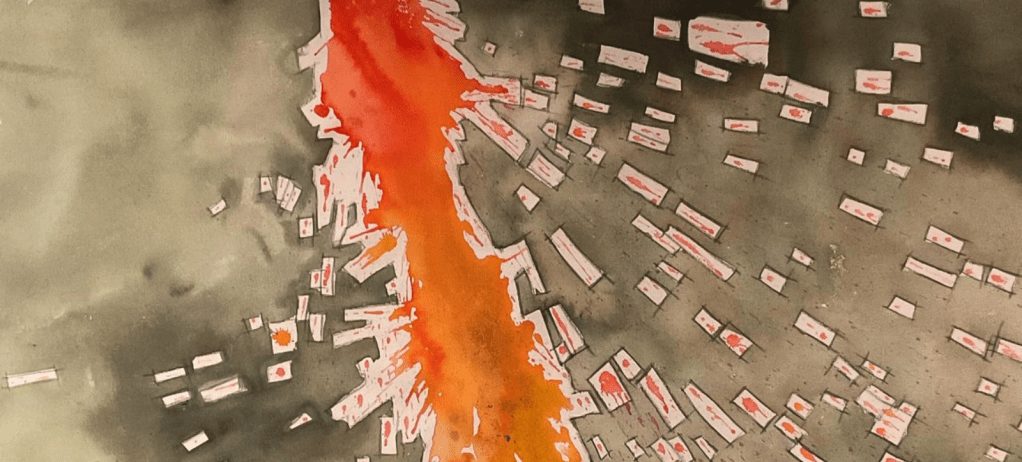
There are moments for which no training exists. Moments when life, without warning, pulls the tablecloth out from under everything you had so carefully arranged—your plans, your certainties, your identity—and it all shatters on the floor. It’s the middle-of-the-night phone call. The unexpected diagnosis. The betrayal you didn’t see coming.
In that instant, your mind, that operating system you took for granted, begins to fail. It glitches. It enters a loop of panic, of “what ifs,” of self-blame and fear feeding on itself. The instinctive reaction is to try to “do” something, anything, to regain control. But in that frantic activity, we often only succeed in drowning faster.
I have come to believe that the most crucial skill for those moments is not strength, nor intelligence, nor optimism. It is the ability to access an inner place that cannot be touched by external chaos. A place I call Soulful Well-being.
The Story of Anny: The Perfect Frame
Anny was a photographer, and her life, like her work, was based on controlling the frame. At 32, she had built a reality of studied beauty: a minimalist apartment bathed in light, a rising career photographing designer spaces, and a relationship with Daniel that seemed taken from one of her own portraits. Her schedule was a perfect composition of work, yoga, and dinners with friends. Chaos, for her, was an aesthetic element that could be contained within a 4×5 frame.
Reflective Pause #1: And you, what is the “perfect frame” you have built for your life? What elements—career, relationships, routines—uphold the image of who you believe you should be? What do you feel in the pit of your stomach just thinking that one of them could break?
The Fall: The World Out of Focus
The tablecloth was pulled out on an autumn Tuesday. Daniel, after weeks of tests for a persistent tingling in his hands, received a diagnosis: a degenerative neurological disease. A sentence, uttered by a doctor in an impersonal room, that acted as a shockwave, demolishing their planned future in a matter of seconds.
Anny’s first reaction was what the world expects from someone “strong”: she went into crisis management mode. She became an expert researcher, an amateur nutritionist, an administrator of medical appointments. Her life transformed into a spreadsheet of symptoms, experimental treatments, and anti-inflammatory diets. She stopped taking pictures. She stopped seeing her friends. She suffered in silence, convinced that her pain was a luxury she couldn’t afford. She was so busy trying to “fix” the situation that she ceased to be present in it. The relationship with Daniel became tense, a logistical exercise in caregiving instead of a shared refuge. Her head wasn’t cool; it was burning in a fire of desperate control.
Reflective Pause #2: In the face of a crisis, our first impulse is often frantic action. It’s a way to numb the fear and helplessness. But what if this need to “do” is a trap? What if, by trying to control everything, we are avoiding the one thing the situation asks of us: to simply “be” in the midst of the pain?
The Discovery: Inhabiting the Empty Space
The breaking point came one night, after an argument. Daniel, with a devastating calm, said to her: “Anny, I need you, not a project manager. I’m right here, in front of you, and I feel like you’ve disappeared.”
That sentence broke her. She went for a walk with no destination and ended up sitting on a bench, under the orange glow of a streetlight. For the first time in months, she allowed herself to do nothing. Not to research, not to plan, not to search for a solution. She simply allowed herself to feel the crushing weight of reality: the helplessness, the fear, the grief for the future that would not be. She cried. And in the center of that storm, in the total exhaustion of her struggle, something happened. A silence.
It wasn’t an empty silence, but a space. An inner space that had been there all along, buried under layers of mental noise. In that space, there were no answers, no solutions. But there was a calm. A feeling of being anchored to something deeper than the circumstances. It wasn’t happiness or optimism. It was a solid, quiet sense of being. It was her Soulful Well-being, her only unassailable space.
Reflective Pause #3: Soulful Well-being is your most fundamental asset. It is not a feeling; it is a place. It is the inner certainty that even if you lose your job, your health, your relationships, or your possessions, your essential core remains intact. It is the source of a truly “cool head,” because it does not depend on the outside world being calm. It is born from radical self-compassion, especially when you are suffering the most.
The Reconstruction: A New Kind of Frame
From that night on, Anny changed her approach. She didn’t abandon Daniel or the fight, but she approached it from a different place. She began to practice, every day, small acts of “disengagement”: sitting in silence for five minutes before looking at her phone in the morning; taking walks without a fixed destination; and most importantly, learning to be with Daniel in his vulnerability, without the need to “fix” him.
She picked up her camera again, but her gaze had changed. She stopped looking for perfection in empty spaces and began to find a profound beauty in the imperfect, in the human: Daniel’s hands trembling slightly as he held a cup, the laughter of an elderly couple in the park. Her art became more honest, more powerful. Her life, though objectively harder and more uncertain, felt subjectively richer and more real.
Crystallizing Soulful Well-being
So, what exactly is this precious good?
Soulful Well-being is not the absence of problems, but the presence of an unalterable inner core. It is the ability to be a sanctuary of peace for yourself, regardless of the intensity of the external storm. It is your true permanent residence in a world of temporary circumstances.
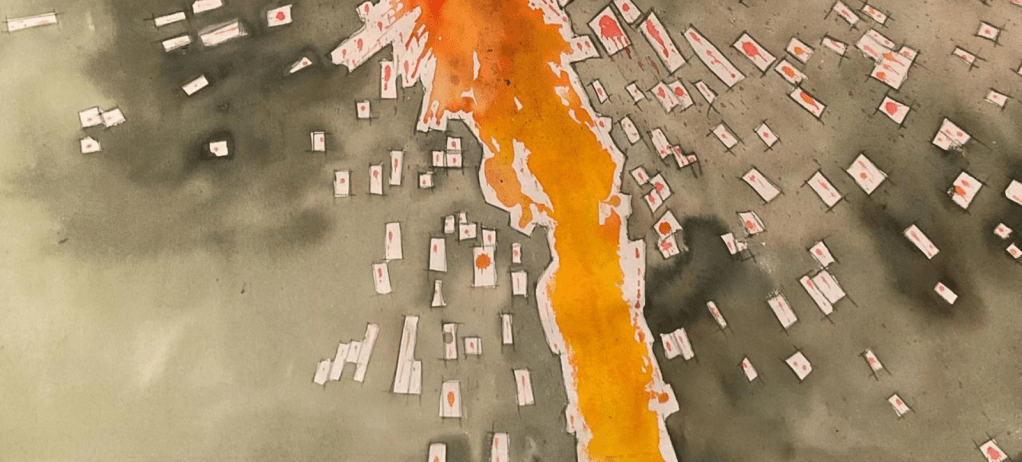
Inner Training: Practices to Cultivate Your Soulful Well-being
Cultivating this good does not require grand gestures, but small, consistent practices that build an internal anchor.
- The Micro-Dose of Stillness. Every day, give yourself one minute—just one—of deliberate stillness. It can be before your first coffee, or while looking out the window at the office. In that minute, your only goal is to feel your own presence. Feel the weight of your body, the air entering and leaving your lungs. It is a reminder that, beyond your roles and your tasks, you simply are.
- Labeling the Storm. When you feel panic or anxiety begin to rise, instead of fighting against it, name it silently. “Ah, here is the fear.” “This is the feeling of helplessness.” By labeling the emotion without judgment, you create a small space between you and it. You stop being the storm and become the observer of the storm, which gives you back a sliver of power.
- The Self-Compassion Question. In your hardest moment, when you feel overwhelmed or like you have failed, ask yourself this simple, radical question: “What is the kindest thing I could do for myself right now?”. The answer might be something as simple as drinking a glass of water, taking three deep breaths, or forgiving yourself for not being perfect. It is the act of treating yourself with the same kindness you would offer a good friend.
The Non-Negotiable Wealth
The world will always find a way to pull the tablecloth. The real question is not if the crisis will come, but where we will be standing when it does. We can be standing on the fragile china of our external achievements and expectations, or we can be anchored to the firm ground of our own Soulful Well-being.
Keeping a cool head is not an act of emotional suppression; it is an act of deep connection with that inner space that no catastrophe can touch. It is the discovery that even when you have lost everything, the most important thing—your capacity to be a sanctuary of peace for yourself and for others—still belongs to you. That is your only non-negotiable wealth.
For Your Reflection:
- If tomorrow you lost the one thing that most defines your external identity (your job, your role, your status), what would be left of you in the silence that followed?
- What is your default strategy when chaos hits: frantic action to regain control, or a pause to connect with your inner state?
- What small, one-minute practice could you introduce into your day to start becoming familiar with the “space” of your Soulful Well-being?

